


 Sign In


Artificial intelligence is reshaping medical practice across every specialty, from radiology and pathology to primary care and surgery. As healthcare systems worldwide integrate AI tools into clinical workflows, medical professionals face a critical decision: which AI training program will best advance their specific career objectives?
The explosion of AI education options creates both opportunity and confusion. Physicians, nurses, administrators, and allied health professionals now have access to hundreds of courses ranging from brief webinars to comprehensive certification programs. However, not all AI training delivers equal value, and choosing the wrong course can waste precious time and resources while failing to build the competencies you actually need.
This guide walks you through a systematic framework for selecting AI in medicine courses that align with your role, experience level, and professional goals. Whether you’re a practicing clinician looking to integrate AI into patient care, a medical student preparing for future practice, or a healthcare administrator evaluating AI implementations, understanding how to assess course quality and relevance will help you make an informed investment in your professional development.
Understanding Your Learning Objectives Before Selecting Courses
Before evaluating specific courses, you need clarity on what you want to achieve through AI education. Medical professionals pursue AI training for distinctly different reasons, and your learning objectives should directly influence course selection.
Clinical practitioners often seek courses that help them understand how AI tools work, interpret their outputs, and integrate them into diagnostic or treatment workflows. A radiologist evaluating AI-assisted image analysis needs different knowledge than an emergency physician considering AI-powered triage systems. Your learning objectives might include understanding how algorithms process medical data, recognizing when AI recommendations align with clinical judgment, or explaining AI outputs to patients and colleagues.
Research-focused professionals typically need deeper technical knowledge. If your goal involves developing AI applications, validating algorithms, or publishing research on AI in medicine, you’ll need courses covering machine learning fundamentals, data science methodologies, and biostatistics. These programs often include hands-on coding experience and project-based learning rather than just conceptual overviews.
Healthcare administrators and policy professionals need strategic rather than technical expertise. Courses for this audience should address AI implementation planning, vendor evaluation, regulatory compliance, ethical considerations, and workflow integration. The focus shifts from how algorithms function to how AI technologies impact organizational operations, patient outcomes, and healthcare economics.
Medical educators require knowledge that enables them to teach others about AI. This means understanding AI concepts well enough to explain them clearly, staying current with emerging applications, and recognizing how AI will change clinical education. Courses for educators often emphasize pedagogical approaches alongside technical content.
Taking time to articulate your specific learning goals creates a filter for evaluating whether a course matches your needs. Write down three to five concrete objectives, such as “understand how to evaluate diagnostic accuracy of AI radiology tools” or “learn to assess bias and fairness in clinical algorithms.” These objectives become your criteria for course selection.
Assessing Your Current Knowledge Level and Technical Background
AI in medicine courses span a wide spectrum from introductory overviews for non-technical audiences to advanced programs requiring programming skills and statistical knowledge. Matching your current knowledge level to course prerequisites prevents frustration and wasted resources.
Medical professionals without technical backgrounds should look for courses explicitly designed for clinicians. These programs assume medical expertise but not computer science knowledge, introducing AI concepts through clinical examples and case studies. They typically avoid programming requirements and complex mathematics, focusing instead on practical understanding of how AI tools function and when to trust their outputs.
Professionals with some technical exposure, such as those who have completed basic statistics courses or worked with research databases, can consider intermediate programs. These courses often include light programming components, data visualization exercises, and deeper exploration of how machine learning algorithms learn from medical data. They bridge clinical and technical domains without requiring extensive coding experience.
Those with strong quantitative backgrounds, including physicians with research training, biostatisticians, or professionals who have completed data science fundamentals, can pursue advanced courses covering algorithm development, model validation, and technical implementation. These programs often use Python or R, require comfort with linear algebra and probability theory, and include substantial project work.
Read course descriptions carefully for prerequisite statements. Terms like “no programming required” or “designed for clinicians” indicate introductory levels. Phrases mentioning “familiarity with Python recommended” or “basic statistics required” signal intermediate expectations. Requirements for “machine learning fundamentals” or “calculus and linear algebra” mark advanced programs.
Many platforms offer assessment quizzes or prerequisite courses. Taking these helps you gauge whether you have sufficient background or need foundational training first. Starting at the right level maximizes learning efficiency and prevents the discouragement that comes from courses that are either too simplistic or too technically demanding.
Evaluating Course Content Relevance to Your Medical Specialty
AI applications vary dramatically across medical specialties, making specialty-specific content evaluation essential. A course focused heavily on medical imaging offers limited value to a psychiatrist, while training in natural language processing for clinical notes may hold little relevance for a surgical subspecialist.
Review course syllabi and module descriptions for examples and applications relevant to your field. Radiology and pathology professionals should seek courses covering image analysis, computer vision, and diagnostic accuracy metrics. Cardiology and neurology practitioners benefit from training addressing signal analysis, pattern recognition in physiological data, and arrhythmia or seizure detection algorithms.
Primary care physicians need courses exploring AI applications in population health, risk prediction, clinical decision support, and patient communication tools. Emergency medicine and critical care specialists should look for content on triage systems, early warning scores, and real-time monitoring algorithms. Surgical specialties benefit from training on preoperative risk assessment, surgical planning tools, and robotics-assisted procedures.
Medical specialties with less current AI penetration should seek courses that help them anticipate future applications. Psychiatry and behavioral health professionals can benefit from training on natural language processing, sentiment analysis, and digital therapeutics, even though these applications are still emerging. Looking at adjacent specialties with more mature AI adoption provides insight into future possibilities.
Courses offering specialty-specific case studies and examples make abstract concepts concrete. Generic AI overviews may cover important principles but fail to show how those principles apply in your daily practice. Courses that include real patient cases, discuss specialty-specific regulations, and address field-relevant ethical questions provide more immediately applicable knowledge.
Consider whether you need depth in one specialty or breadth across multiple applications. Subspecialists typically benefit from deep, focused training, while hospitalists, primary care physicians, and administrators may value broader exposure to AI applications across various clinical domains. Some courses offer modular structures allowing you to focus on relevant specialties while skipping less applicable content.
Examining Instructor Credentials and Institutional Reputation
The quality of AI in medicine education depends heavily on instructor expertise and institutional commitment to the field. Evaluating credentials helps ensure you learn from experienced professionals with both technical knowledge and clinical insight.
Look for courses taught by individuals with dual expertise in medicine and data science or computer science. Instructors who are practicing physicians with formal AI training or computer scientists working in healthcare settings bring valuable interdisciplinary perspective. Their ability to translate technical concepts into clinical context makes learning more effective.
Check instructor backgrounds on professional networking sites and academic profiles. Publications in peer-reviewed journals, presentations at major conferences, and involvement in AI research or implementation projects indicate active engagement in the field. Instructors who contribute to AI development or have deployed AI systems in clinical practice offer practical insights beyond theoretical knowledge.
Institutional reputation matters particularly for certification programs. Established medical schools and universities with strong computer science or engineering departments often produce high-quality AI healthcare courses. Organizations like Stanford University, Massachusetts Institute of Technology, Johns Hopkins University, and other research-intensive institutions have robust AI in medicine programs taught by leaders in the field.
Professional medical organizations increasingly offer AI training developed in collaboration with technical experts. Courses from specialty societies like the American College of Radiology, American Heart Association, or American Medical Association combine clinical perspective with technical accuracy. These organizations often consult AI experts while ensuring content relevance to practicing professionals.
Be cautious with courses from organizations without clear medical or technical credentials. The AI education market includes many providers capitalizing on current interest without deep expertise. Verify instructor qualifications, look for transparent information about who developed course content, and check whether courses have been reviewed or endorsed by recognized medical or technical organizations.
Reading reviews and testimonials from previous participants provides insight into course quality. Look beyond star ratings to detailed feedback about whether the course met learning objectives, how effectively instructors explained complex concepts, and whether skills learned translated to professional practice. Alumni outcomes, such as career advancements or successful AI project implementations, indicate course effectiveness.
Considering Practical Application Opportunities and Hands-On Learning
Theoretical knowledge about AI provides limited value without opportunities to apply concepts to real medical scenarios. Courses incorporating hands-on learning, case studies, and project work build skills that transfer directly to professional practice.
Look for courses offering interactive components beyond passive video lectures. Simulation exercises, virtual labs, and guided projects allow you to work with real or realistic medical data, test algorithms, and interpret results. These experiences develop practical competencies that pure lecture-based learning cannot provide.
Case-based learning using authentic clinical scenarios helps connect AI concepts to practice. Courses that present real diagnostic dilemmas, walk through how AI tools analyze patient data, and discuss how clinicians integrate AI recommendations into decision-making build applicable knowledge. Look for examples drawn from actual clinical implementations rather than hypothetical or oversimplified cases.
Some advanced courses include capstone projects requiring participants to develop proposals for AI applications in their own practice settings. These projects might involve identifying clinical problems suitable for AI solutions, reviewing available tools, or designing implementation plans. Even if you don’t actually deploy the proposed solution, this exercise develops skills for evaluating and integrating AI in real healthcare environments.
Access to AI tools and platforms within the course provides valuable experience. Some programs offer cloud-based environments where you can experiment with machine learning software, train simple models on sample data sets, or test diagnostic algorithms. This hands-on exposure demystifies AI and builds confidence in understanding how these systems function.
Peer collaboration components enhance learning through diverse perspectives. Discussion forums, group projects, and peer review exercises expose you to how professionals in different roles and specialties think about AI applications. This broadens understanding beyond your immediate specialty and helps you anticipate how AI affects interdisciplinary care teams.
Mentorship or expert consultation opportunities add significant value. Programs that include office hours, expert Q&A sessions, or direct feedback on assignments allow you to get personalized guidance on concepts you find challenging or applications you want to explore. This interaction transforms generic education into tailored professional development.
Analyzing Certification Value and Professional Recognition
Not all AI in medicine courses offer formal certification, and not all certifications carry equal professional weight. Understanding credential value helps you assess return on investment for time and money spent on training.
Accredited continuing medical education credits provide recognized professional development documentation. Courses approved by organizations like the Accreditation Council for Continuing Medical Education ensure quality standards and count toward maintenance of certification requirements. If maintaining board certification matters to your career, prioritize courses offering relevant CME credits.
Certificate programs from established institutions carry more professional weight than completion badges from unknown providers. A certificate from a recognized university medical school or professional society signals substantive training to colleagues, employers, and credentialing bodies. These credentials can support promotion applications, career transitions, or qualification for AI-related roles.
Specialty-specific certifications demonstrate focused expertise. Some professional societies now offer AI competency credentials for members, such as certificates in AI for radiology or cardiology. These specialty-focused credentials hold particular value when pursuing roles involving AI implementation or leadership in your field.
Consider whether certification requirements match your learning goals. Some programs grant certificates simply for completing video lectures, while others require passing comprehensive exams, submitting projects, or demonstrating practical competencies. More rigorous certification processes generally produce credentials with greater professional recognition.
Research how employers and institutions in your area value specific certifications. If you’re pursuing AI training to qualify for new positions or leadership roles, investigate which credentials hiring managers recognize and respect. Networking with professionals who have completed courses you’re considering provides insight into career impact.
Be realistic about certification limitations. Even highly regarded AI certificates supplement rather than replace core medical credentials or extensive experience. They demonstrate commitment to learning and baseline competency but don’t qualify physicians to practice outside their specialty or independently develop clinical AI systems without appropriate technical collaboration.
Comparing Time Commitment and Schedule Flexibility Options
AI education programs vary dramatically in duration and scheduling format. Selecting courses that fit your professional and personal schedule increases likelihood of successful completion.
Short courses lasting hours or days provide introductory exposure. These work well for busy professionals wanting overview knowledge or deciding whether to pursue deeper training. However, brief courses can only cover concepts superficially and rarely include substantial hands-on practice.
Certificate programs typically require weeks to months of part-time study. These programs allow deeper exploration of topics through multiple modules, progressive skill building, and comprehensive projects. Many offer self-paced options allowing you to complete coursework around clinical schedules and personal commitments.
Semester-long university courses or extensive specialization programs demand significant time investment over several months. These intensive programs build deep expertise but require dedicated time commitment that may challenge professionals in demanding clinical roles.
Consider whether courses offer synchronous or asynchronous learning options. Synchronous programs with set meeting times facilitate live interaction with instructors and peers but demand schedule coordination. Asynchronous courses with recorded content and flexible deadlines accommodate irregular schedules common in healthcare but offer less immediate interaction and support.
Many professionals find modular programs appealing because they can complete individual courses over time rather than committing to an entire program upfront. This approach allows you to assess whether AI education meets your needs after completing initial modules before investing in advanced content.
Evaluate time expectations realistically against your current obligations. A course requiring ten hours weekly may seem manageable until you factor in clinical responsibilities, administrative duties, family commitments, and inevitable unexpected demands. Underestimating time requirements leads to incomplete courses and wasted investment.
Some institutions offer intensive boot camp formats concentrating learning into brief periods. These work well if you can dedicate focused time, such as during scheduled vacation or sabbatical, but pose challenges if attempting to balance with ongoing clinical work.
Weighing Course Cost Against Expected Professional Value
AI in medicine courses range from free introductory programs to expensive advanced certificates costing thousands of dollars. Assessing cost relative to expected benefits ensures wise investment of financial resources.
Free courses from reputable platforms like Coursera, edX, or university open courseware provide legitimate entry points into AI education. While they may lack certification or personalized support, they offer quality content for professionals exploring whether AI training aligns with career goals. Many free courses allow paid upgrades for certificates and additional features.
Moderate-cost programs typically range from hundreds to low thousands of dollars. These often provide structured learning paths, instructor interaction, practical exercises, and recognized certificates. For most practicing professionals seeking applicable AI knowledge, these mid-tier programs offer good value.
Premium programs charging several thousand dollars or more should deliver commensurate value through extensive content, significant hands-on experience, expert instruction, career services, or highly recognized credentials. Evaluate whether premium pricing reflects quality or simply market positioning.
Consider whether employers offer training budgets or professional development support. Many healthcare systems investing in AI implementations fund employee education, viewing it as infrastructure investment. Utilizing organizational resources expands access to higher-quality programs while demonstrating initiative to leadership.
Weigh course costs against potential career benefits. If AI expertise positions you for promotion, career transition, or increased compensation, higher program costs may represent worthwhile investment. However, if you’re exploring AI out of general interest without clear career applications, expensive programs may not justify their cost.
Look for money-back guarantees or trial periods allowing you to assess course quality before full financial commitment. Some platforms offer preview modules or satisfaction guarantees reducing financial risk associated with course selection.
Professional association memberships sometimes include discounted or free access to AI training. If you maintain memberships in specialty societies, check available educational resources before purchasing external courses. Some organizations provide substantial AI training as member benefits.
Exploring Specialized Training Paths for Different Healthcare Roles
Different healthcare roles require distinct AI competencies, making role-specific training paths more efficient than generic overviews.
Physicians and advanced practice providers need courses balancing clinical decision-making with AI tool utilization. Training should address how to evaluate AI diagnostic accuracy, interpret confidence scores, recognize algorithm limitations, and communicate AI-informed recommendations to patients. Courses covering clinical validation of AI tools, understanding when to override AI suggestions, and integrating AI into existing diagnostic processes serve this audience well.
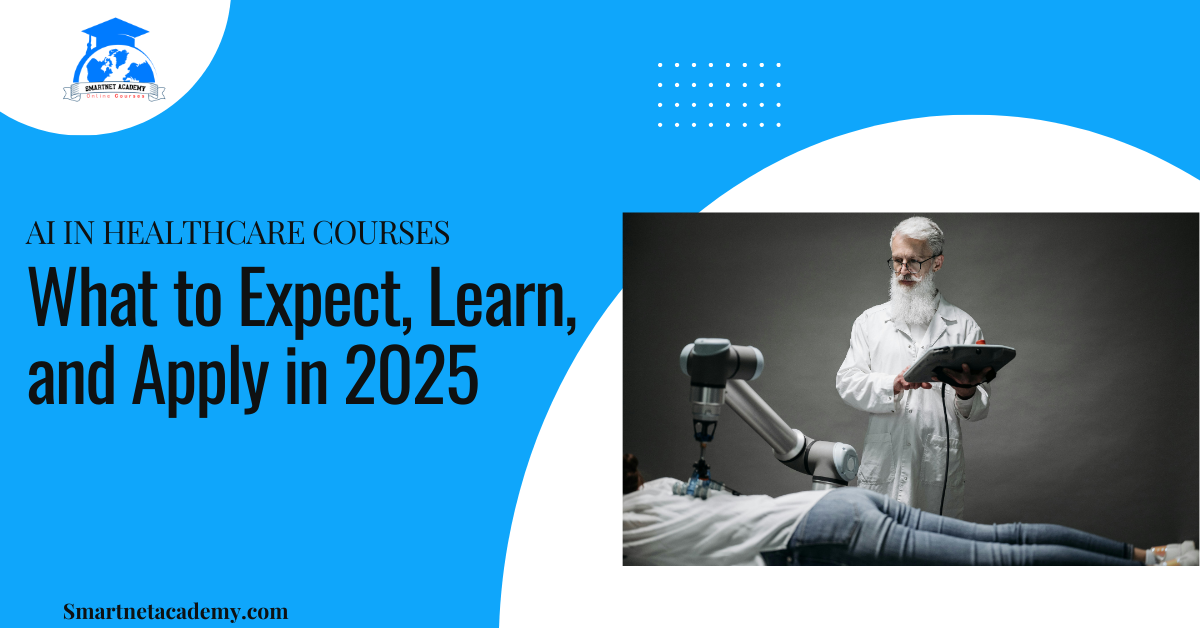
For those specifically focused on AI applications in patient care and clinical decision-making, exploring comprehensive programs like AI in Healthcare Courses: What to Expect, Learn, and Apply in 2026 provides structured pathways aligned with clinical practice needs.
Nurses and clinical staff often interact with AI through workflow integration rather than independent decision-making. Training for these roles should emphasize practical system use, recognizing AI alerts and flags, documenting AI-related information, and escalating situations where AI outputs seem questionable. Courses covering AI in nursing informatics, clinical documentation, and patient monitoring address relevant applications.
Healthcare administrators need strategic and operational knowledge about AI implementation. Training should cover AI project planning, vendor evaluation and selection, regulatory compliance, workflow analysis, change management, and return on investment assessment. Courses designed for health informatics leaders or chief medical information officers address these organizational responsibilities.
Medical researchers require technical depth in algorithm development, validation methodology, and publication standards for AI research. Training should include machine learning fundamentals, proper training and testing data separation, bias detection and mitigation, clinical trial design for AI interventions, and ethical considerations in AI research.
Health informaticists and data analysts benefit from courses bridging clinical and technical domains. Training should address healthcare data structures, interoperability standards, electronic health record optimization, data quality for AI applications, and translating between clinical and technical stakeholders.
Medical students and residents can pursue foundational courses providing overview knowledge while focusing on how AI will shape future practice. Training emphasizing adaptability, lifelong learning about evolving technologies, and ethical frameworks for AI in medicine prepares emerging professionals for AI-augmented careers.
Reviewing Course Outcomes and Alumni Success Stories
Course outcomes provide concrete evidence of educational effectiveness beyond marketing claims.
Look for data on completion rates and participant satisfaction. High completion rates suggest courses effectively engage participants and provide value justifying time investment. Low completion may indicate poor quality, unrealistic time demands, or mismatched expectations.
Alumni testimonials describing specific career impacts carry more weight than generic praise. Stories about professionals who implemented AI solutions in their practice, transitioned to AI-focused roles, or published AI-related research demonstrate tangible outcomes.
Check whether course graduates have gone on to leadership positions in AI implementation, joined AI development teams, or become recognized voices in AI healthcare discussions. These outcomes suggest the course built substantive expertise rather than just surface knowledge.
Some institutions track employment outcomes for certificate graduates. Data showing career advancement, role transitions, or compensation increases among program alumni indicates professional value.
Examine whether courses update content regularly to reflect rapid AI evolution. Programs that continuously incorporate new developments, emerging applications, and recent research maintain relevance better than static courses developed years ago.
Making Your Final Decision and Maximizing Learning Value
After evaluating options against the criteria outlined above, synthesize your assessment to select courses aligned with your specific situation.
Create a comparison matrix listing courses you’re considering alongside key factors: learning objectives match, content relevance, instructor credentials, hands-on opportunities, certification value, time requirements, cost, and role alignment. Rating each course on these dimensions clarifies which options best fit your needs.
Start with one carefully selected course rather than enrolling in multiple programs simultaneously. This focused approach allows you to assess quality, determine whether the content meets expectations, and decide whether to pursue additional training in the same topic area or explore different aspects of AI in medicine.
Approach courses actively rather than passively consuming content. Take notes connecting concepts to your practice, identify specific applications for your setting, and discuss ideas with colleagues. This active engagement transforms abstract knowledge into practical competency.
Join course discussion forums and participate in peer interactions. Learning from others’ questions and perspectives enriches understanding and often reveals applications you hadn’t considered.
Apply concepts to your work environment as you learn them. Even small exercises like explaining an AI concept to a colleague or evaluating an AI tool your organization uses reinforces learning and demonstrates immediate value.
Plan how you’ll share knowledge gained with your team or organization. Teaching others solidifies your own understanding while multiplying the return on your training investment.
Moving Forward with Confidence in Your AI Education Journey
Choosing the right AI in medicine course requires thoughtful analysis of your goals, background, specialty needs, and professional situation. By systematically evaluating options against the framework presented here, you can select training that builds genuine competency rather than just adding credentials.
The investment you make in AI education positions you to participate in reshaping healthcare rather than simply reacting to changes imposed by others. Whether you integrate AI tools into clinical practice, lead implementation initiatives, contribute to algorithm development, or educate others about AI in medicine, quality training provides the foundation for meaningful contribution.
As AI becomes increasingly central to medical practice across all specialties, professionals with informed perspectives and practical skills will drive how these technologies serve patients and advance healthcare. Taking time to choose appropriate education ensures your learning journey delivers lasting professional value.


