


 Sign In


The FDA has crossed a historic milestone that signals a fundamental shift in modern healthcare. As of July 2025, the agency’s public database lists over 1,250 AI-enabled medical devices authorized for marketing in the United States. This represents a dramatic acceleration from the approximately 950 devices recorded just one year earlier in August 2024.
This surge reflects AI’s transition from experimental technology to mainstream healthcare infrastructure. What was once a niche frontier reserved for academic research has become an essential component of modern medical practice across nearly every specialty.
The implications extend far beyond regulatory statistics. Healthcare professionals, hospital administrators, technology companies, and patients are all affected by this rapid expansion of AI-powered diagnostic and treatment tools. Understanding this transformation is essential for anyone involved in healthcare.
The Explosive Growth of FDA-Cleared AI Medical Devices
To appreciate this milestone, consider the trajectory. In 2015, the FDA cleared just 6 AI-enabled medical devices. By 2020, that number had grown to fewer than 400 total clearances since the first AI device was authorized in 1995. Then the floodgates opened.
The agency cleared 91 AI devices in 2022 and an impressive 221 in 2023 alone. This acceleration continued through 2024 and into 2025, pushing the cumulative total past 1,000 devices by late 2024 and beyond 1,250 by mid-2025. The growth rate shows no signs of slowing.
Several converging factors drive this growth. Investment in healthcare AI has surged, with venture capital flowing into medical AI startups at unprecedented rates. Major technology companies and established medical device manufacturers alike are racing to incorporate AI capabilities into their products.
The regulatory pathway has also matured. The FDA’s 510(k) clearance process for AI devices has become more predictable, and manufacturers have learned how to navigate requirements effectively. Nearly all AI medical devices enter the market through this substantial-equivalence pathway rather than more costly premarket approval processes.
Market analysts project the global AI medical device market could reach $96 billion by 2030 or even $255 billion by 2033, reflecting the enormous commercial opportunity driving continued innovation and investment.
Where AI Medical Devices Are Making the Greatest Impact
Radiology Dominates the Landscape
Medical imaging accounts for approximately 75-80% of all FDA-authorized AI medical devices. This dominance reflects the natural fit between AI pattern recognition capabilities and the interpretation of X-rays, CT scans, MRIs, and mammograms. These imaging modalities produce rich data that algorithms can analyze efficiently.
AI radiology tools assist with everything from detecting lung nodules and brain hemorrhages to identifying signs of diabetic retinopathy and breast cancer. Many systems function as triage tools, flagging urgent cases for immediate radiologist review and ensuring critical findings don’t wait in lengthy worklists.
Recent research published in Nature Communications shows AI-assisted mammography screening can improve cancer detection rates by approximately 13.8% without increasing recall rates. This suggests AI can genuinely enhance clinical outcomes rather than simply add to workload or generate false positives.
Major healthcare systems like Mount Auburn Hospital in Massachusetts are now deploying AI risk models like Mirai to tailor mammogram schedules based on individual patient risk profiles, representing a shift toward personalized screening approaches.
Cardiology and Neurology Expansion
Cardiology represents approximately 10% of FDA-authorized AI devices. Applications include ECG interpretation, arrhythmia detection, cardiac imaging analysis, and risk stratification. Apple’s FDA-cleared atrial fibrillation detection feature on Apple Watch exemplifies how AI is reaching consumers directly through wearable technology.
AliveCor’s Kardia devices demonstrate real patient-level benefits when properly validated, enabling individuals to capture medical-grade ECGs at home and share them with cardiologists. Such devices democratize access to cardiac monitoring previously available only in clinical settings.
Neurology AI devices focus on stroke detection and triage. Viz.ai’s stroke detection platform exemplifies how AI can accelerate time-critical care decisions, alerting specialists within minutes of concerning scan findings. In stroke treatment, minutes can mean the difference between full recovery and permanent disability.
Emerging Specialties
Ophthalmology, pathology, and dentistry are seeing rapid AI adoption. The FDA’s first autonomous AI diagnostic system, IDx-DR for diabetic retinopathy, demonstrated that AI can make clinical decisions without specialist oversight for certain well-defined applications, expanding access to screening in primary care settings.
Oncology AI tools are receiving breakthrough device designations throughout 2025. Companies like Artera, Roche, and Harrison.ai received FDA breakthrough designations for AI-powered prostate cancer, lung cancer, and CT imaging applications, signaling regulatory recognition of their potential to significantly improve patient outcomes.
Pathology AI is transforming how tissue samples are analyzed. Digital pathology platforms with AI assistance can identify cancer cells, grade tumors, and even predict treatment response from biopsy slides, augmenting pathologists’ capabilities.
How FDA Regulation Is Evolving with AI Technology
The FDA has worked to adapt its regulatory framework to the unique characteristics of AI medical devices. In January 2025, the agency published comprehensive draft guidance for AI-enabled device software functions, representing the most significant regulatory development for this technology category to date.
Total Product Lifecycle Approach
The 2025 guidance establishes lifecycle management and marketing submission recommendations that recognize AI’s adaptive nature. This addresses a fundamental challenge: AI systems that learn and improve over time don’t fit traditional regulatory models designed for static, unchanging devices.
Key requirements include detailed model descriptions, data lineage and split documentation, performance validation tied to specific clinical claims, bias analysis and mitigation plans, human-AI workflow specifications, and ongoing monitoring protocols.
Predetermined Change Control Plans
The FDA’s final guidance on Predetermined Change Control Plans (PCCPs) allows manufacturers to pre-specify types of updates they may implement post-market without requiring new regulatory submissions. This enables algorithms to improve continuously while maintaining appropriate safety oversight.
PCCPs must include descriptions of planned modifications, protocols for implementing changes including retraining and validation procedures, and impact assessments evaluating benefits and risks. Transparency requirements ensure clinicians and patients know when algorithms have been updated and how performance may have changed.
FDA Adopts AI Internally
Interestingly, the FDA itself is adopting AI to address capacity challenges. In 2025, the agency launched ‘Elsa,’ an internal generative AI chatbot powered by Anthropic’s Claude, to help staff with reading, writing, and summarizing internal documents. Commissioner Marty Makary highlighted Elsa’s potential to streamline scientific reviews and reduce processing times as the agency faces workforce constraints.
Notable AI Medical Device Breakthroughs in 2025
Beyond routine clearances, the FDA’s Breakthrough Device Designation program has recognized several innovative AI systems that may provide significant advantages over existing alternatives for debilitating or life-threatening conditions.
AI for Precision Oncology
In July 2025, the FDA granted breakthrough designation to ArteraAI Prostate, an AI precision medicine tool that analyzes digital pathology images to help clinicians make risk-based treatment decisions for localized prostate cancer patients. The system predicts long-term outcomes including 10-year risk of distant metastasis and prostate cancer-specific mortality.
Roche received breakthrough designation in April 2025 for the first AI-driven computational pathology companion diagnostic device. This system helps identify non-small cell lung cancer patients most likely to benefit from targeted therapies, enabling more personalized treatment selection.
Harrison.ai received three FDA Breakthrough Device Designations for CT imaging solutions in October 2025, further expanding AI’s role in cancer detection and treatment planning.
Breast Cancer Risk Prediction
In July 2025, Prognosia Breast received breakthrough designation. Developed at Washington University School of Medicine, this AI analyzes mammograms to predict an individual’s five-year breast cancer risk, enabling personalized screening recommendations. The technology is compatible with both 2D digital mammography and 3D tomosynthesis systems.
Lung Cancer Prognostic Tools
Serial CTRS received breakthrough designation in February 2025 as an AI-based prognostic tool that stratifies non-small cell lung cancer patients into high- and low-risk mortality categories. Such tools help clinicians tailor treatment intensity to individual patient risk profiles rather than applying one-size-fits-all approaches.
Challenges and Concerns with Rapid AI Medical Device Growth
The milestone of 1,250+ devices raises important questions about validation standards, transparency, and real-world performance that the healthcare community must address.
Validation Evidence Gaps
Research published in 2025 found that fewer than 2% of FDA-cleared AI medical devices were supported by randomized clinical trials. Most 510(k) summaries lack details on study design, sample sizes, and demographic diversity of validation populations.
A JAMA Network Open study examining 903 AI devices found that clinical performance studies were reported for only about half of analyzed devices. Less than one-third of clinical evaluations provided sex-specific data, and only one-fourth addressed age-related subgroups. This raises legitimate concerns about whether devices perform equally well across different patient populations.
Real-World Performance Monitoring
AI system performance can degrade after deployment due to data drift, changes in clinical practice, shifts in patient demographics, or variations in imaging equipment. The FDA is actively seeking public input on best practices for measuring and evaluating real-world AI device performance, with comments due in December 2025.
Currently, most AI devices are evaluated through retrospective testing or static benchmarks that may not reflect dynamic real clinical conditions. Post-market surveillance approaches designed for traditional medical devices may be inadequate for adaptive AI systems.
Transparency Concerns
Some observers note that FDA reporting on AI devices has slowed even as approvals accelerate. The agency’s AI device list has been updated irregularly, with gaps of several months between updates since the Trump administration took office. Greater transparency would help stakeholders track the evolving landscape and make informed decisions.
What 1,250+ AI Devices Means for Healthcare Professionals
The proliferation of FDA-authorized AI devices has immediate and practical implications for clinical practice that every healthcare professional should understand.
AI Literacy Becomes Essential
Physicians and other clinicians will increasingly encounter AI-assisted tools in their daily workflows. Understanding how these systems work, their limitations, and how to interpret their outputs becomes a core professional competency alongside traditional clinical skills.
Harvard Medical School now offers continuing education courses on AI in clinical medicine. The American Board of Artificial Intelligence in Medicine provides certification programs. These educational opportunities reflect growing recognition that AI training must become standard for healthcare professionals at all levels.
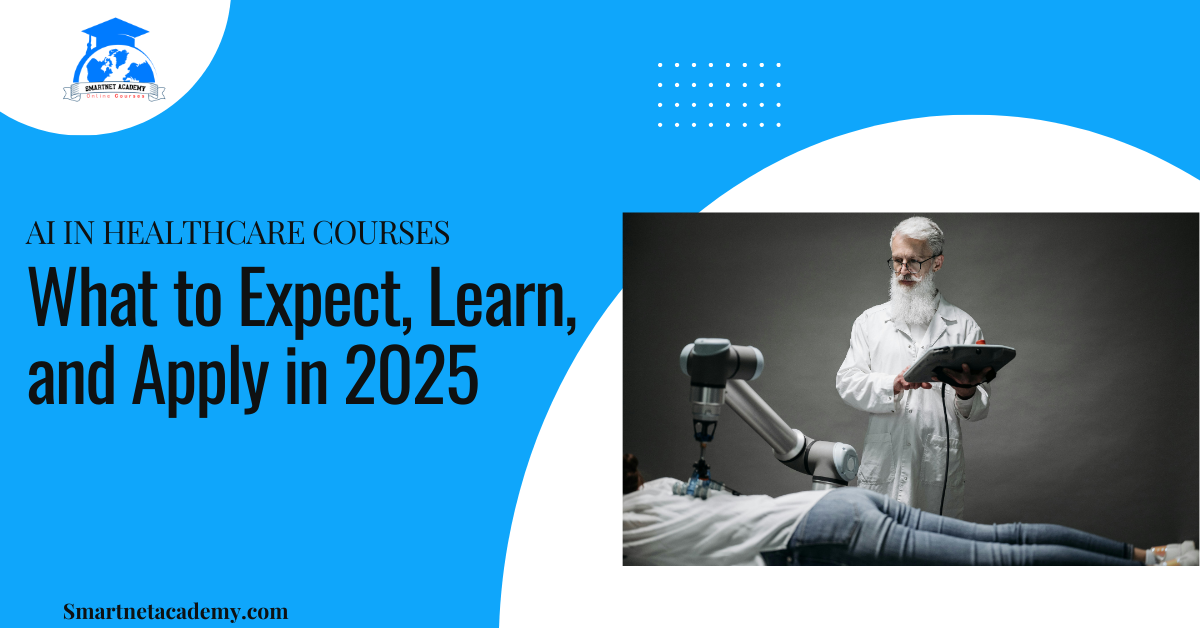
For comprehensive training covering AI applications across clinical settings, diagnostic support, and healthcare workflows, explore SmartNet Academy’s AI in Healthcare course. This program helps healthcare professionals understand and apply AI tools effectively in clinical practice while developing critical evaluation skills.
Workflow Integration Challenges
Deploying AI tools effectively requires thoughtful workflow integration. The best technology fails if it disrupts clinical processes, adds to documentation burden, or generates alert fatigue. Healthcare organizations need professionals who understand both clinical needs and technical capabilities to bridge these domains.
Vendor Evaluation Skills
With over 1,250 devices available and growing, healthcare organizations face difficult selection decisions. Clinicians who can critically evaluate AI vendor claims, assess validation evidence quality, understand regulatory status, and recognize potential limitations become valuable assets to their organizations.
Watch: Understanding AI in Healthcare
For additional context on how AI is transforming healthcare and the regulatory landscape for medical devices, explore relevant educational video content:
These videos cover topics including FDA regulatory frameworks for AI devices, clinical implementation case studies, expert perspectives on AI’s role in modern healthcare, and demonstrations of how AI diagnostic tools work in practice.
What Comes Next: The Future of AI Medical Device Regulation
The current milestone of 1,250+ devices is just a waypoint on a longer journey. Industry projections suggest the AI medical device market could reach $96 billion by 2030 or even $500 billion by 2035, driven by continued innovation and healthcare system adoption.
Generative AI Enters Healthcare
Generative AI applications are beginning to appear in healthcare, though most current FDA-cleared devices use predictive AI models. The FDA is actively considering how to regulate generative AI, including large language models and multimodal systems that combine text, images, and other data types.
South Korea’s MFDS has already released guidelines for generative AI medical devices, signaling global regulatory attention to this emerging technology category. The FDA’s Digital Health Advisory Committee has discussed considerations for AI-enabled digital mental health applications.
International Regulatory Harmonization
Global regulatory approaches to AI medical devices are converging. The EU AI Act, which came into force in August 2024, introduces additional requirements for AI systems in healthcare. International organizations including WHO and G7 are pushing toward harmonized evaluation criteria that could simplify multinational market access.
Evidence Standards May Strengthen
As the field matures, expect increased demands for rigorous clinical validation. Calls for more randomized clinical trials of AI devices and better real-world performance monitoring may reshape regulatory expectations. The tension between enabling rapid innovation and ensuring patient safety will continue to drive policy discussions.
AlphaFold and Drug Discovery Revolution
The impact of AI extends beyond diagnostic devices. Google DeepMind’s AlphaFold, which won the 2024 Nobel Prize in Chemistry, has predicted structures for over 200 million proteins. This technology is accelerating drug discovery and disease research in unprecedented ways.
Isomorphic Labs, Google DeepMind’s drug discovery spinoff, expects AI-designed drugs to enter clinical trials in 2025. The traditional drug development timeline of 10-15 years could be dramatically shortened, bringing new treatments to patients faster and reducing development costs.
Five years after AlphaFold’s debut, over 3.3 million researchers have used the tool. The original work has been cited in more than 40,000 academic papers, with 30% focused on disease research. AlphaFold has contributed to approximately 200,000 research publications overall.
Conclusion: A Transformative Moment in Healthcare History
The FDA’s authorization of over 1,250 AI medical devices marks a transformative moment in healthcare history. AI has moved from research laboratories to clinical practice at remarkable speed, fundamentally changing how diseases are detected, diagnosed, and treated.
This growth brings both opportunities and responsibilities. Healthcare professionals must develop AI literacy to use these tools effectively and safely. Regulators must balance enabling innovation with protecting patient safety. Manufacturers must prioritize rigorous validation and transparent reporting of device performance.
The patients who benefit from earlier cancer detection, faster stroke treatment, more personalized care, and reduced diagnostic errors are the ultimate beneficiaries of this technological transformation. Ensuring that AI delivers on its promise requires continued attention and collaboration from all healthcare stakeholders.
The 1,250 device milestone is not an endpoint but a signpost marking healthcare AI’s rapid maturation. How we navigate the next phase—addressing validation gaps, ensuring equitable performance, integrating AI into clinical workflows thoughtfully—will determine whether this technology fulfills its potential to improve health outcomes for millions of patients worldwide.


