


 Sign In


Why Intelligent Content Marketing Matters Now
Content marketing has reached a critical inflection point. Marketing teams face unprecedented pressure to deliver personalized experiences across multiple channels while managing ever-growing content libraries. Traditional content approaches simply cannot keep pace with modern consumer expectations.
Intelligent content marketing represents the evolution your strategy needs. This approach transforms content from a static asset into a dynamic, adaptable resource that works harder across every touchpoint in your customer journey.
The fundamental difference lies in how content gets structured, managed, and deployed. Rather than creating separate pieces for each platform, intelligent content marketing builds modular components that automatically adapt to different channels while maintaining consistency and quality.
What Is Intelligent Content Marketing and How Does It Differ From Traditional Approaches
Intelligent content marketing combines strategic content development with advanced technology to create assets that are structurally rich, semantically categorized, and automatically discoverable across multiple platforms. The content becomes reusable, reconfigurable, and adaptable without manual intervention for each deployment.
The Traditional Content Marketing Problem
Traditional content marketing operates in silos. Marketing teams create blog posts separately from social media content. Product descriptions exist independently from email campaigns. Customer support develops documentation without coordination with marketing materials.
This fragmented approach creates several critical problems. Teams duplicate effort by recreating similar content for different channels. Brand messaging becomes inconsistent across touchpoints. Updates require manual changes across multiple platforms. Content performance remains difficult to measure holistically.
The Intelligent Content Marketing Solution
Intelligent content marketing solves these challenges through four core principles: unification, adaptiveness, efficiency, and accuracy.
Unification bridges organizational silos to deliver consistent brand voice and identity across all channels. Content gets stored in a central repository with metadata tagging that makes discovery effortless for any team member.
Adaptiveness creates modular content that transforms automatically for delivery across websites, mobile apps, email campaigns, social media, and emerging channels. The same core content adapts its presentation based on the medium and audience.
Efficiency makes content work harder by eliminating duplication and enabling systematic reuse. Marketing teams spend less time recreating content and more time on strategic initiatives that drive business growth.
Accuracy delivers personalized content to the right person at precisely the right time through intelligent systems and processes. Rather than spray-and-pray mass communication, intelligent content marketing enables true one-to-one personalization at scale.
The Five Essential Characteristics of Intelligent Content Marketing
Understanding the fundamental building blocks helps marketers implement intelligent content successfully. These five characteristics distinguish intelligent content from traditional approaches.
Modular Content Structure
Modularity breaks content into discrete components designed for efficiency and reuse. Instead of monolithic documents, intelligent content exists as flexible blocks that combine in different configurations.
A product description becomes modular components: technical specifications, feature highlights, benefit statements, use cases, and customer testimonials. Each component stands alone but also combines with others to create complete experiences tailored to specific contexts.
Structured Content Organization
Structure ensures consistency and usability for both humans and machines. Content follows standardized formats that people easily produce and understand while enabling automated processing by content management systems.
Structured content uses consistent templates, formatting conventions, and organizational patterns. This structure allows artificial intelligence tools to parse, analyze, and optimize content effectively.
Reusable Content Components
Reusability designs content and components for use in multiple contexts and formats. The same content block appears on product pages, in email campaigns, within mobile apps, and across social media without recreation.
This reusability dramatically reduces content production time while ensuring consistency. Updates made once propagate automatically across all instances where that content appears.
Format-Free Content Storage
Format independence separates content from presentation. Content exists in its raw form, independent of how it ultimately displays to users. This separation enables the same content to adapt seamlessly across different channels and devices.
A format-free approach means content works equally well on desktop websites, mobile applications, smart speakers, chatbots, and technologies that do not yet exist.
Semantically Rich Metadata
Semantic categorization tags content with meaningful metadata that describes not just what content says but what it means. This rich metadata makes content automatically discoverable by both search engines and internal systems.
Semantic tagging identifies topics, themes, sentiment, reading level, audience segments, and relationships to other content. This metadata powers personalization engines, content recommendations, and advanced search functionality.
How to Implement Intelligent Content Marketing in Your Organization
Transitioning to intelligent content marketing requires systematic planning and execution. These implementation steps provide a roadmap for organizations at any stage.
Conduct a Comprehensive Content Audit
Begin by understanding your current content landscape. Catalog all existing content assets across departments, platforms, and formats. Identify what content exists, where it lives, how it performs, and who creates it.
This audit reveals duplication, gaps, and opportunities. You discover which content resonates with audiences and which underperforms. The audit establishes baseline metrics that measure improvement as you implement intelligent content practices.
Define Clear Business Objectives
Establish specific goals your intelligent content strategy will achieve. These objectives might include increasing website conversions, reducing content production costs, improving customer satisfaction scores, or accelerating time-to-market for product launches.
Clear objectives guide technology selection, process design, and success measurement. Every decision filters through whether it advances these defined goals.
Develop Your Content Model
Content modeling defines the types of content you create and how to structure each type. A robust content model specifies required fields, optional attributes, formatting rules, and relationships between different content types.
Start with your most frequently used content types: articles, product descriptions, case studies, or knowledge base entries. Define the modular components that comprise each type. Establish metadata schemas that enable discovery and personalization.
Content modeling requires collaboration between marketing, IT, design, and other stakeholders. Everyone must understand and commit to the structured approach.
Select Appropriate Technology Infrastructure
Intelligent content marketing requires technology that supports modular, structured content management. Traditional content management systems often cannot deliver the necessary functionality.
Headless content management systems separate content storage from presentation layers. This architecture enables content to flow to any channel through APIs without rebuilding for each platform. Headless systems provide the flexibility intelligent content demands.
Evaluate platforms based on content modeling capabilities, API functionality, workflow management, permission controls, and integration with existing marketing technology. The right system becomes the foundation for your entire intelligent content operation.
Establish Governance and Workflows
Clear governance ensures content quality, consistency, and compliance. Establish standards for content creation, review, approval, and publication. Define roles and responsibilities across your content ecosystem.
Workflow automation streamlines content production while maintaining quality standards. Automated routing sends content to appropriate reviewers. Version control tracks changes and enables rollback when necessary. Publishing workflows ensure content reaches all intended channels.
Train Teams on New Processes and Tools
Technology alone does not create intelligent content. Teams need training on both conceptual understanding and practical skills.
Help content creators understand why intelligent content matters and how it benefits their work. Provide hands-on training with new tools and processes. Develop documentation and resources teams can reference when questions arise.
Change management deserves significant attention. Some team members will resist new approaches initially. Address concerns directly while demonstrating how intelligent content makes their work easier and more impactful.
Start with a Pilot Project
Rather than transforming your entire content operation immediately, begin with a focused pilot project. Choose a specific content type, campaign, or product line for initial implementation.
Pilot projects provide learning opportunities with contained risk. You discover what works, what needs adjustment, and what challenges arise before scaling across the organization.
Measure performance against your established objectives. Document lessons learned. Use pilot insights to refine your approach before broader rollout.
Scale Gradually Across the Organization
After successful pilot completion, expand intelligent content practices systematically. Add additional content types and channels progressively rather than all at once.
This phased approach allows teams to build expertise gradually. You refine processes based on accumulated experience. Early wins build organizational momentum and support for continued expansion.
Intelligent Content Marketing and Artificial Intelligence Integration
Artificial intelligence amplifies intelligent content marketing effectiveness. AI technologies analyze content performance, personalize experiences, and automate optimization in ways manual processes cannot match.
AI-Powered Content Creation and Optimization
AI tools assist content creation by analyzing audience preferences, identifying trending topics, and suggesting optimization opportunities. Natural language processing evaluates readability, sentiment, and topic relevance.
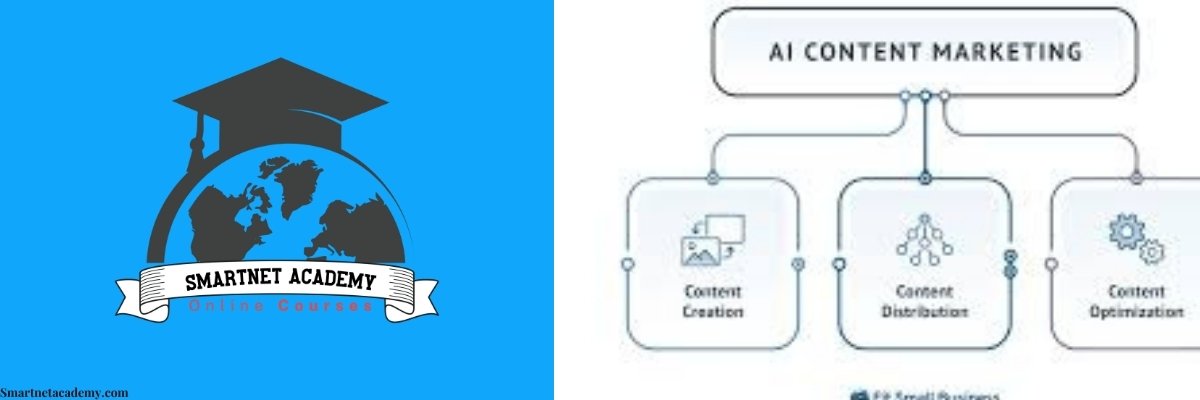
For marketers looking to leverage AI comprehensively, understanding how to automate content marketing with AI creates significant competitive advantages. AI-driven automation streamlines workflows from ideation through distribution while maintaining the human creativity that makes content compelling. Learn more at: https://smartnetacademy.com/how-to-automate-content-marketing-with-ai/
Predictive Content Analytics
AI analyzes historical content performance to predict which new content will resonate with specific audience segments. Machine learning identifies patterns in engagement data that inform content strategy decisions.
Predictive analytics answers critical questions: Which topics generate highest engagement? What content length performs best? Which call-to-action language drives conversions? When should content publish for maximum reach?
Dynamic Content Personalization
AI enables true one-to-one personalization at scale. Systems analyze individual user behavior, preferences, and context to deliver precisely tailored content experiences.
Dynamic personalization goes far beyond inserting a name into an email. AI selects which content blocks to display, in what order, with what messaging, based on real-time analysis of each visitor’s unique characteristics and behavior.
This level of personalization dramatically increases engagement rates, conversion performance, and customer satisfaction. Visitors receive content that feels specifically created for their needs because, in effect, it is.
Measuring Intelligent Content Marketing Success
Effective measurement proves intelligent content marketing ROI and guides ongoing optimization. These metrics matter most.
Content Efficiency Metrics
Track time required to create and publish content before and after intelligent content implementation. Measure how many channels receive content from a single source. Calculate reduction in duplicate content creation effort.
These efficiency gains translate directly to cost savings and resource reallocation. Teams accomplish more with existing resources or redirect saved time to higher-value strategic initiatives.
Content Performance Metrics
Monitor engagement rates, time on page, bounce rates, and conversion rates across all channels. Compare performance of intelligently structured content versus traditionally created content.
Track content reuse frequency. Identify which modular components appear most frequently across different contexts. This analysis reveals your highest-value content assets.
Business Impact Metrics
Connect content performance to business outcomes. Calculate revenue influenced by specific content pieces. Measure customer acquisition costs for campaigns using intelligent content compared to traditional approaches.
Track customer satisfaction scores, support ticket reduction, and sales cycle length. Intelligent content often impacts these business metrics significantly even when direct attribution proves challenging.
Organizations implementing intelligent content consistently report improved content quality, increased production efficiency, and measurable business results. The structured approach eliminates guesswork and enables truly data-driven content strategy.
Overcoming Common Intelligent Content Marketing Challenges
Every organization encounters obstacles when implementing intelligent content marketing. Understanding these challenges helps you prepare effective responses.
The Legacy Content Migration Challenge
Organizations possess vast libraries of existing content. Migrating this legacy content into intelligent content structures requires significant effort.
Prioritize migration based on content value and usage frequency. High-performing, frequently accessed content migrates first. Outdated, low-value content may retire rather than migrate.
Develop migration templates and processes that enable efficient conversion. Consider phased migration over extended periods rather than attempting complete transformation immediately.
The Cross-Departmental Coordination Challenge
Intelligent content marketing requires collaboration across traditionally siloed departments. Marketing, IT, sales, customer service, and product teams must align on strategy, standards, and processes.
Executive sponsorship proves critical for successful cross-functional initiatives. Leadership must communicate the importance of intelligent content and provide resources for implementation.
Regular cross-functional meetings keep teams aligned. Shared success metrics create common ground. Celebrate wins that demonstrate value across multiple departments.
The Technology Integration Challenge
Most organizations operate complex technology ecosystems. Integrating intelligent content systems with existing marketing automation, CRM, analytics, and other platforms presents technical challenges.
Prioritize systems based on strategic importance. Focus initial integration efforts on the highest-value connections. Use APIs and middleware to bridge systems that do not integrate natively.
Work closely with IT teams from project inception. Their expertise in enterprise architecture, security, and integration patterns proves invaluable.
Intelligent Content Marketing for Different Organization Sizes
Intelligent content approaches scale to organizations of all sizes, though implementation specifics vary.
Intelligent Content for Small Organizations
Small organizations with limited content volume may not require full intelligent content infrastructure initially. However, establishing good practices early prevents future problems.
Even small teams benefit from content modeling, consistent templates, and basic metadata tagging. These practices ease content management and prepare organizations for growth.
Cloud-based headless CMS platforms offer intelligent content capabilities without large infrastructure investments. Many provide plans scaled for small business needs and budgets.
Intelligent Content for Mid-Sized Organizations
Mid-sized organizations often reach the inflection point where traditional content approaches break down. Content volume increases. Channel proliferation accelerates. Content silos emerge.
This organizational size represents the sweet spot for intelligent content implementation. The pain points are clear. The benefits are immediate. The investment is justifiable.
Mid-sized organizations should focus on pilot projects that demonstrate ROI quickly. Success with initial implementations builds support for broader rollout.
Intelligent Content for Enterprise Organizations
Large enterprises face the most complex content challenges. Multiple brands, global markets, diverse product lines, and numerous content creators operate simultaneously.
Enterprise intelligent content implementations require careful planning, substantial resources, and extended timelines. The complexity demands dedicated teams and executive-level commitment.
However, the potential benefits are also largest for enterprises. Efficiency gains multiply across large operations. Consistency improvements protect brand value globally. Personalization capabilities enable competitive differentiation.
Future Trends in Intelligent Content Marketing
Intelligent content marketing continues evolving rapidly. These emerging trends will shape the next generation of content strategies.
Conversational Content Experiences
Voice assistants, chatbots, and conversational interfaces represent growing content channels. Intelligent content structures adapt naturally to conversational formats.
Organizations that embrace structured, semantically rich content position themselves to deliver exceptional conversational experiences as these channels mature.
Augmented and Virtual Reality Content
As AR and VR technologies become mainstream, content must adapt to immersive environments. Intelligent content frameworks that separate content from presentation enable deployment to these emerging platforms.
The modular nature of intelligent content allows components to reconfigure for three-dimensional, interactive experiences without complete recreation.
Hyper-Personalized Content Journeys
Personalization capabilities continue advancing. The next generation delivers entirely unique content journeys for each individual based on real-time behavior analysis, predictive modeling, and sophisticated AI.
Intelligent content structures make this hyper-personalization technically feasible. The same content components combine in infinite variations tailored to each person’s precise needs and preferences.
Conclusion: Transforming Your Content Marketing with Intelligent Approaches
Intelligent content marketing represents more than incremental improvement over traditional approaches. It fundamentally transforms how organizations create, manage, and deliver content experiences.
The modular, structured nature of intelligent content eliminates duplication, ensures consistency, and enables true omnichannel delivery. Semantic richness powers personalization and discovery. Format independence future-proofs content investments.
Implementation requires commitment and systematic execution. Organizations must audit existing content, establish clear objectives, develop content models, select appropriate technology, and train teams thoroughly.
The investment delivers measurable returns. Content production becomes more efficient. Marketing effectiveness increases. Customer experiences improve. Business results follow.
Organizations that embrace intelligent content marketing position themselves for sustained competitive advantage. They deliver exceptional content experiences that build lasting customer relationships and drive business growth.
The question is not whether to implement intelligent content marketing but how quickly you can make the transition. Your competitors are already moving forward. The tools and knowledge exist today to transform your content strategy.
Begin your intelligent content marketing journey now. Start small if necessary, but start immediately. The sooner you implement these practices, the sooner you realize the substantial benefits of truly intelligent content.


